
This conversation originally was published in Forbes.
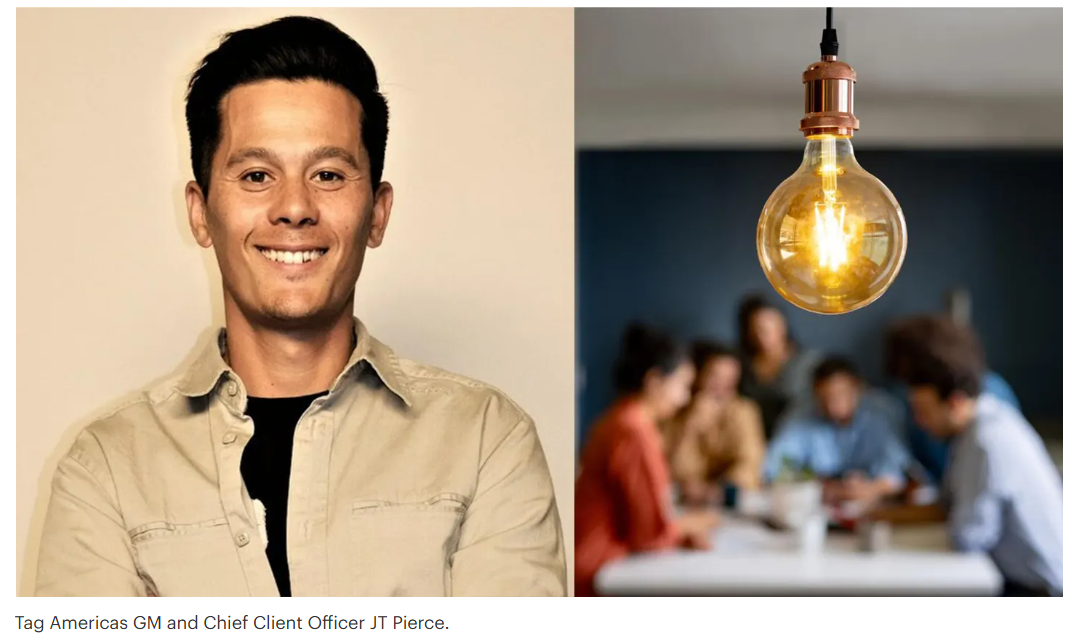
In-housing has been a growing trend for the last several years. Why is it getting to be so much more popular now?
Pierce: It’s becoming increasingly difficult for marketers to find everything they need in one place from a content standpoint.
There was a time when you had your ad agency and your digital agency. That has changed a lot as the content landscape has changed. And so the same agencies that give you big, bold culture-driving ideas are not always the ones that can also give you all the scale that’s needed to bring those ideas all over the globe.
There was a period of time where in-house teams were very focused on what I would call the “blocking-and-tackling work”: the sort of below-the-line work. And then [in] 2012 or 2013, Agency Inside at Intel grew to be one of the preeminent in-house models. I spent some time at DoorDash, and we had a very similar model in terms of wanting that internal team to not just do the blocking-and-tackling work, but to also apply creativity to business problems.
I think the reason for a lot of the change, the trends and the pendulum swinging is because as the media landscape changes, as technology changes, as marketing is impacted by all those things, content needs shift, too. Content models need to change, and that’s what we’re starting to see, especially with in-house right now.
For those that are not in-house now, when should a brand consider doing it?
I think that it all depends on what you’re trying to get to. Any really good in-house model I’ve seen offers two things.
One is proximity to the business. Having an in-house group of creatives, producers, makers and strategists that can focus on developing content from inside your organization means you are building creative solutions that solve business problems, not just answer briefs.
When you’re a marketer and working with an external creative agency, there’s that barrier that exists between an external partner and your internal teams. And sometimes that’s great. Creative agencies provide divergent thinking, big ideas that maybe you can’t get from an internal team. Your internal team is so close to the day-to-day business challenges. But being able to get creative talent that’s really focused on solving business problems, that’s one sort of moment at which we see clients wanting to bring stuff in-house.
The other is just around speed, agility and often cost. When you are working with internal teams, you can create processes, engagement models and structures that are right for your organization. It doesn’t have to be a model from an agency where they have an account person that joins up with you. It could be anything you want. There’s account agencies where we have PMs that plug straight into marketers, where we have account-type folks that plug into marketers, or marketers plug directly into creatives. It can kind of be whatever you want it to be.
Oftentimes, you can do it in a cost-effective way—[though] not if you go hire a whole bunch of senior-level group creative directors [and] take on their salaries and overhead. Depending on what you’re trying to build, building an in-house model that reflects your organization and has talent that’s really built for what needs to be accomplished [can be cost effective]. We see that across clients like Intel. They have said we’re saving them between 25% and 30%. Clients like Heineken, it’s closer to 40% as opposed to sort of traditional agencies, because you’re not paying for as much overhead and other things.
You said that this is like a pendulum—now, in-housing is something that everybody is doing. Where do you see the pendulum swinging next?
I think AI and the use of AI in creative and creative production is accelerating it. We’re seeing from our clients that marketing budgets are constrained. There’s cautious optimism going into next year, but there’s also a lot of pressure on keeping teams lean. There’s a ton of pressure for marketers to be leveraging AI across all facets of their business.
But when it comes to creative production, I think that a lot of our clients’ expertise is not in the building of the creative team or arming that creative team with all the technology tools and things that they need to be bringing innovation to a brand’s creative studio. I think one of the things we’re going to start to see is more of a shift towards leaning into the expertise of external partners for that AI-driven innovation, as it relates to creative and creative production.
I think what we’re going to start to see is a lot more models that are emerging from the middle: Bespoke models based on what a client needs. That might not be a fully in-house thing or it might not be a fully by-subscription, but that it’s a combination.
I’m seeing the different studio models that we have in place with clients, and I’m starting to see it naturally happen. Clients are [saying], ‘We’ve been here, but as we get smarter on things like automation, we might not need these resources. We’re going to have to upskill some of our people, but the shape of our studio might look different. Can you help us build toward what that vision is?’
AI is disrupting in a lot of good ways [in] our industry. It’s going to disrupt also the content model for in-house teams.